
Aansprakelijkheidsverzekering muzikant: wat dekt een AVB?
The soundcheck is running late, the hum in the monitor won’t go away—and then someone from the venue asks for your insurance certificate. You have your set list, your cables, your invoice. But what exactly do they mean by “certificate” here?
A performance is more than just the minutes on stage. There’s lugging equipment, plugging things in, and interacting with the tech crew and the audience—and wherever people are working, things can go wrong. Musicians looking for the right liability insurance would do well to first consider what could actually happen at the venue.
The soundcheck is running late. While the technician is still trying to eliminate a hum from the monitor, someone from the venue asks for your insurance certificate. You have your set list, cables, and invoice with you. But what kind of insurance does the venue actually want to see?
A performance involves more than just the time you spend on stage. You set up, move equipment, work with technicians, and sometimes the audience is right next to your gear. Things can go wrong: someone might trip over a cable, the venue’s equipment might get damaged, or a patron might get injured.
Anyone searching for “musician liability insurance” mainly wants to know which risks need to be covered. It’s important to distinguish between them. Damage to someone else isn’t covered by the same insurance as damage to your own instruments or financial loss due to a professional error.
So first, consider what could actually happen while you’re working. Then you can determine which insurance policy is right for you.
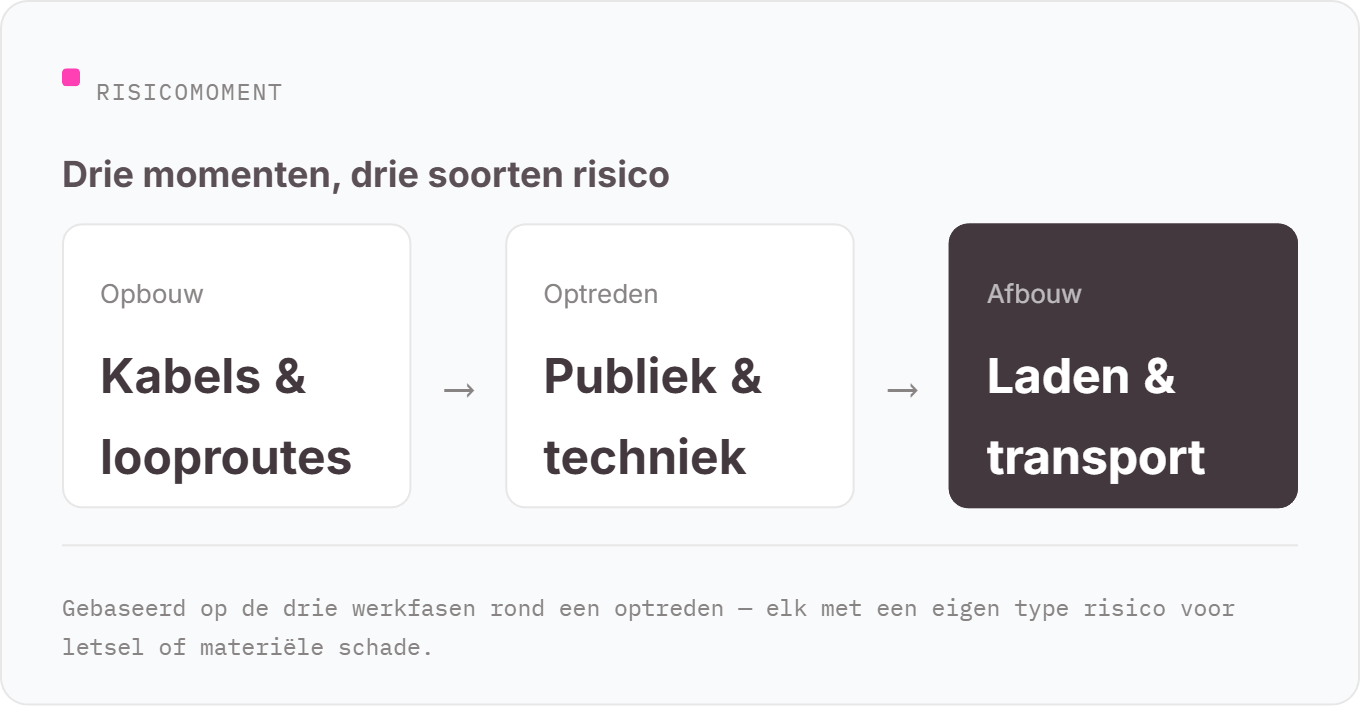
Three situations where liability may arise
During setup, the venue is often still bustling with activity. Flight cases are being rolled around, tripods are being set up, and various people are working simultaneously on lighting and sound. Suppose your cable is lying across a walkway and a venue employee trips and falls. That’s a common example of potential injury resulting from your work. Whether you’re legally liable and whether an insurer will pay depends on the facts and policy terms.
During the performance, the risk shifts to the audience and shared equipment. A poorly secured component hits a visitor, a microphone stand falls against a rented grand piano, or a smoke machine triggers a venue’s safety system. After the show, the same hustle and bustle begins again: teardown, loading, and transport.
The Chamber of Commerce (KVK) defines general liability insurance as coverage for damage that you, your employees, or your products cause to others or their property while working. This typically involves personal injury, property damage, and consequential financial losses resulting from such an accident. Public liability insurance is therefore particularly relevant when something physical happens.
The Oddny guide on general liability insurance for creative self-employed professionals helps you understand the basics first.
What a business liability insurance policy can protect on stage
A general liability insurance policy can provide coverage, within the terms of the policy, if your business causes harm to another person. For a musician, DJ, or performer, these are useful questions to consider:
-
Does injury to audience members and venue staff fall under the coverage?
-
Do setup and teardown count as insured activities?
-
Are assistants, band members, or hired technicians also covered?
-
Does product liability coverage apply if you also sell merchandise?
-
Does the policy apply in all countries where you perform?
-
What is the coverage limit per claim and per insurance year?
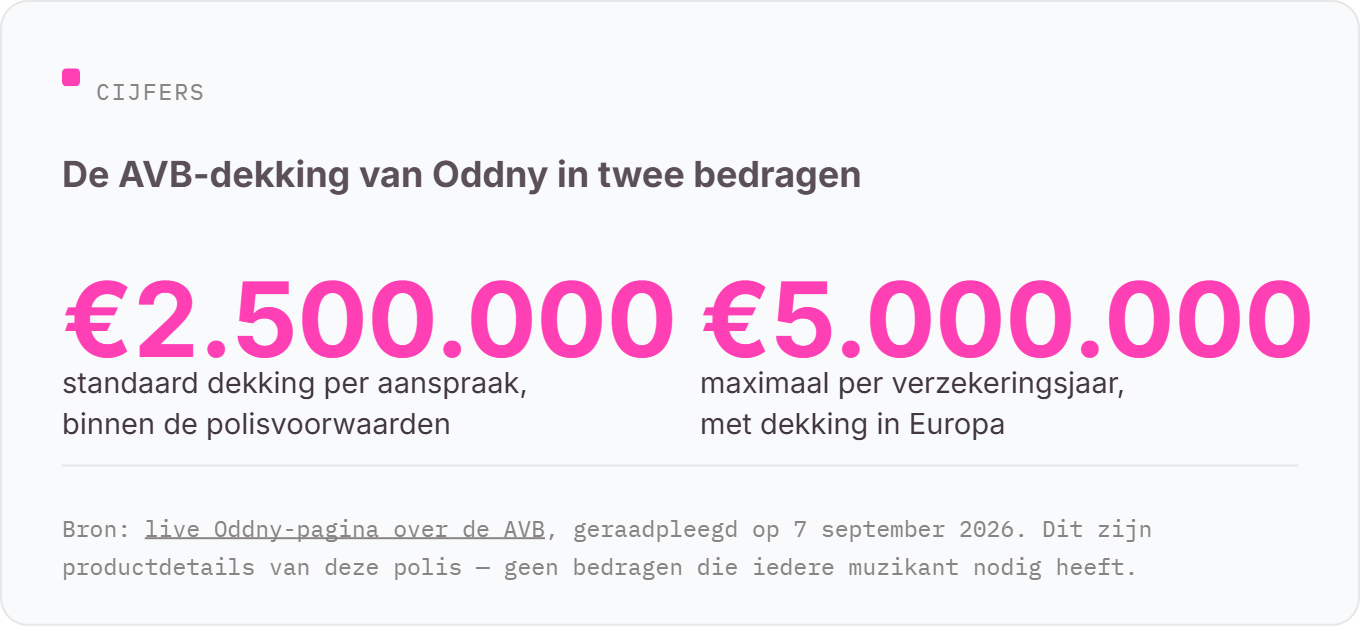
As of September 7, 2026, the Oddny live page regarding the General Liability Insurance (AVB) lists a standard amount of €2,500,000 per claim and a maximum of €5,000,000 per insurance year, with coverage in Europe and assessment based on the terms and conditions. These are product details for this specific policy, not the coverage amounts every musician needs. A client may require a specific minimum coverage amount.
General Liability Insurance (AVB) is not legally required for most self-employed professionals. However, the Chamber of Commerce (KVK) does state that a client or trade association may require proof of insurance. Therefore, well in advance of the performance date, ask the venue what type of insurance and what insured amount are specified in the contract. “Insurance required” is too vague to act upon.
A professional error is different from a fallen tripod
Musical work can also cause financial loss without a physical incident. Consider a producer who provides incorrect technical specifications, or a music teacher who gives professional advice that, according to a client, causes damage. This is not automatically covered by general liability insurance.
The Chamber of Commerce (KVK) makes the distinction clear: professional liability insurance (BAV) covers financial loss resulting from errors in advice, design, or calculation; general liability insurance (AVB) covers personal injury and property damage caused by your business, products, or activities. For many live performances, the question of physical liability insurance will come up first. If you also provide consulting, production, or other professional services, describe those separately and ask whether professional liability coverage is advisable.
Be specific for the insurer. “I’m a musician” doesn’t say enough. Explain whether you perform solo, lead a band, teach, rent out equipment, produce shows, or organize your own events. A single profession can consist of six different activities.
Your Own, Borrowed, and Rented Equipment
A guitar, controller, or costume isn’t “someone else’s” property if it belongs to you. Damage to your own equipment is therefore not typically covered under a general liability policy. For that, you’ll need to look into instrument, inventory, electronics, or other equipment insurance, depending on usage and terms.
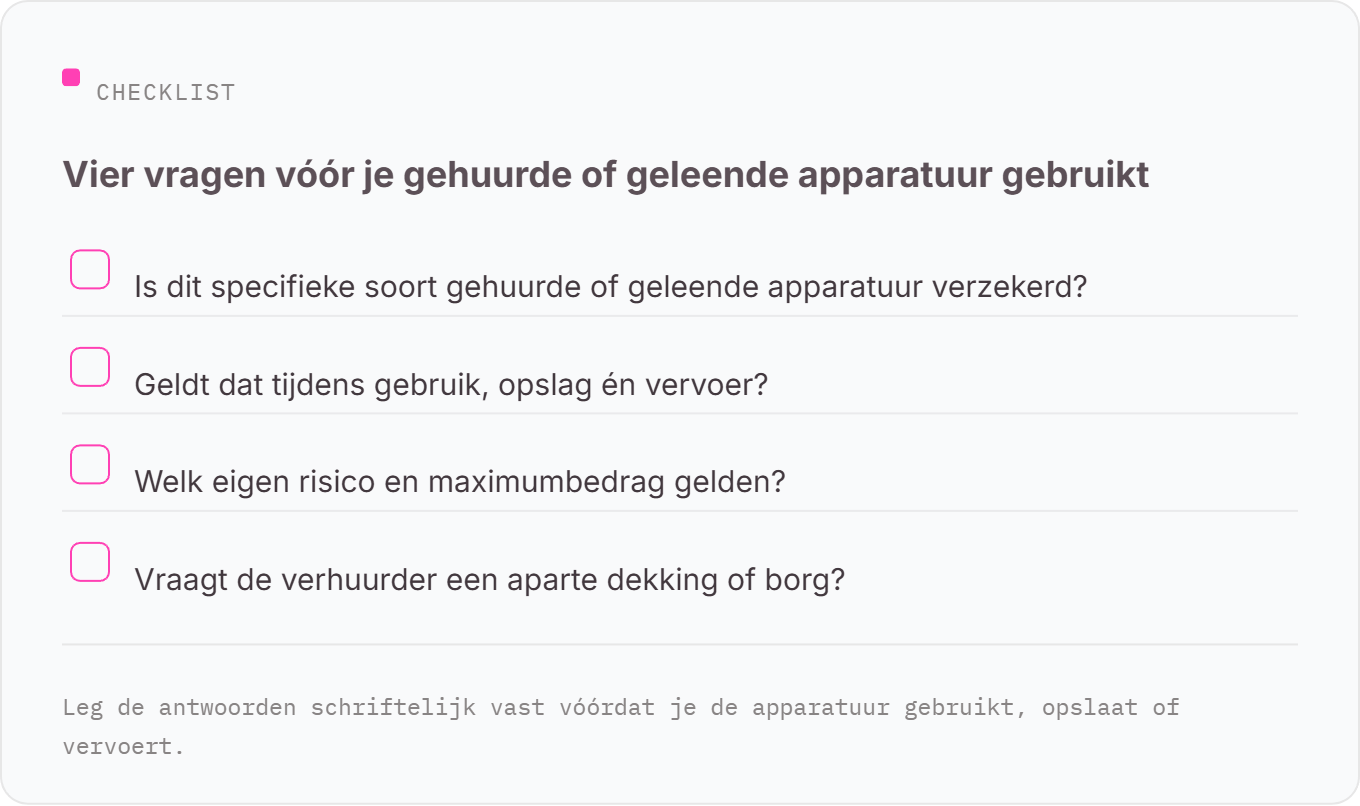
With borrowed or rented items, the issue becomes more complicated. You might use an amplifier provided by the venue or rent a wireless system for a single evening. Such items may fall under an exclusion for property under your supervision, sometimes referred to as “custody.” Never assume that property damage to others automatically includes rented gear. Ask in writing:
The Chamber of Commerce (KVK) lists items such as decks, a mixer, a controller, speakers, headphones, USB drives, a laptop, and software as equipment used by a professional DJ.
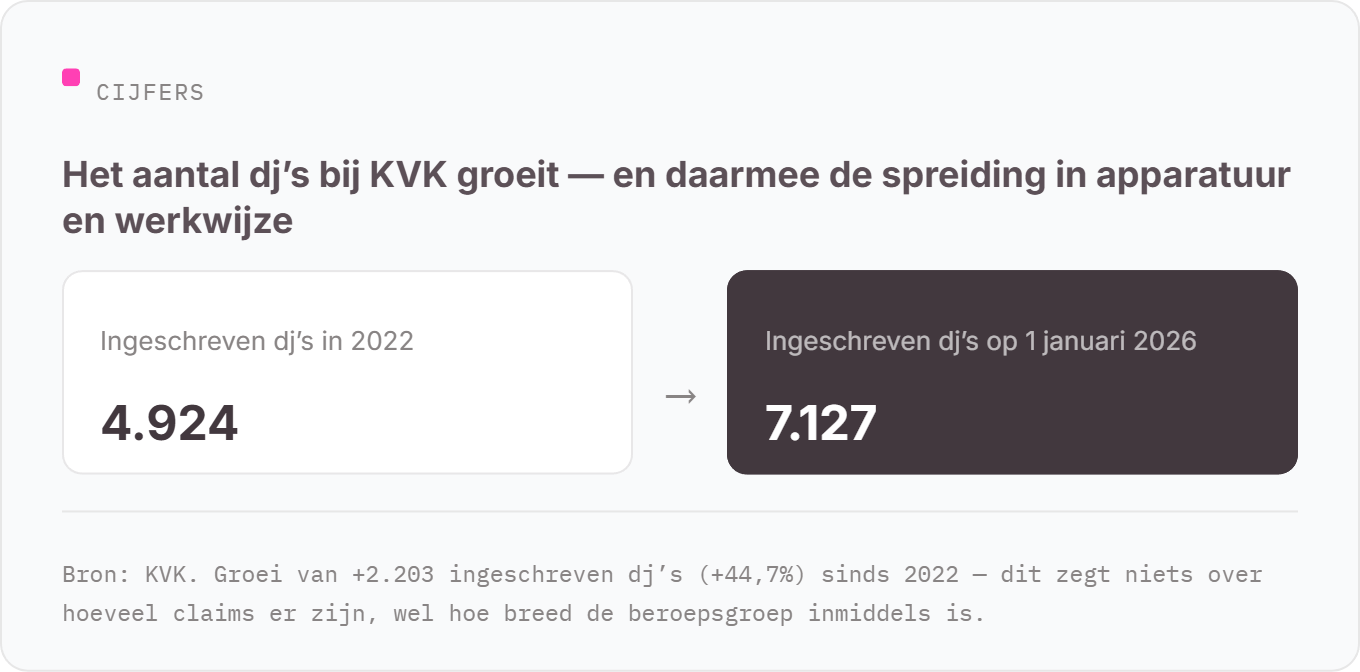
That growth says nothing about the number of claims. It does, however, show just how broad the profession has become, and why the term “DJ” alone says little about equipment or working methods.
The Oddny tool on pitfalls for independent musicians can help you review your activities and agreements more thoroughly.
Read the venue contract before the soundcheck
Confirm the price, duration, travel expenses, cancellation policy, and technical details via email or contract. The Chamber of Commerce advises new DJs to confirm the price via email, list all agreements made, and specify the terms and conditions and travel expenses. Add four points regarding liability:
-
who sets up which equipment;
-
who monitors cable routes and audience distance;
-
who bears the risk for the venue’s property;
-
What proof of insurance must be provided, and by when?
Be wary of broad indemnification clauses that place all liability for damage related to the event on you. Just because a contract shifts responsibility doesn’t mean your insurance policy accepts that responsibility. Have any unclear provisions reviewed and, if necessary, send them to your insurer in advance.
If you’re working with a band or ensemble, make sure to clarify internally who is signing the contract, who is hiring staff, and in whose name equipment is being rented. A single booking can involve multiple companies. The insurance policy does not automatically follow the group name listed on the poster.
Musician’s Liability Insurance: Do the Soundcheck
Before your next booking, spend five minutes walking the route from the bus to the stage and back. Who walks where? Which items belong to you, the venue, or a rental company? Who is working on behalf of your business? What does the contract require?
Compare those answers with your general liability insurance (AVB), any supplementary liability insurance (BAV), and equipment coverage. If you want to know how Oddny describes general liability insurance for creators, first review the coverage, limits, and premium indicators. If that fits your work, you can then calculate your premium.
So the search query “liability insurance for musicians” leads you to your actual workflow, not just a standard answer. A good soundcheck doesn’t guarantee a flawless evening. It just makes sure everyone knows what’s going on. Liability works the same way.