Ziek als zzp'er: je inkomen en vier rustige opties
The fever subsides, the laptop opens again—and yet the studio feels strangely quiet. You can’t just make up for a week of illness: the shoot has been rescheduled, the hours are gone, and it’s only when you start rescheduling that you realize what that silence really costs.
Being sick as a freelancer affects not only your body but also your income—starting from day one. That’s no reason to panic, but it does call for a clear plan. Four strategies can work together to form that safety net.
The fever’s gone, your laptop is open again, and yet the studio feels different. The camera stayed in its bag for five days. The client rescheduled the shoot, but the hours you thought you’d bill are gone. It’s only when you rearrange your schedule that you realize what a week of the flu really costs.
Being sick as a freelancer requires recovery—and something that often goes unnoticed in salaried employment: your income doesn’t just keep coming in on its own. Your body wants rest, while your mind is already tallying quotes, deadlines, and fixed expenses.
There’s no need to turn this into a disaster scenario. What’s needed is a realistic timeline. A short interruption requires a different approach than three months of absence, and temporary support is different from coverage for long-term disability. Four approaches can each play a part: a financial buffer, a “Broodfonds” or other gift-sharing group, disability insurance, and practical continuity measures.
As a self-employed person, you feel the financial impact of illness from day one
That doesn’t automatically mean you’ll have no income while you’re sick. Perhaps a client has already paid an advance, a license is still active, or you can postpone a deadline. But if a photographer misses a shoot day or a designer doesn’t work on a project for a week, billable hours can decrease starting from day one. Meanwhile, rent, software, and health insurance premiums don’t wait.
So look at two figures. The first is the revenue you’ll likely be unable to make up. The second is what needs to be covered for personal and business expenses while you recover. That difference prevents you from simply dividing a missed week by four and assuming every month is the same.
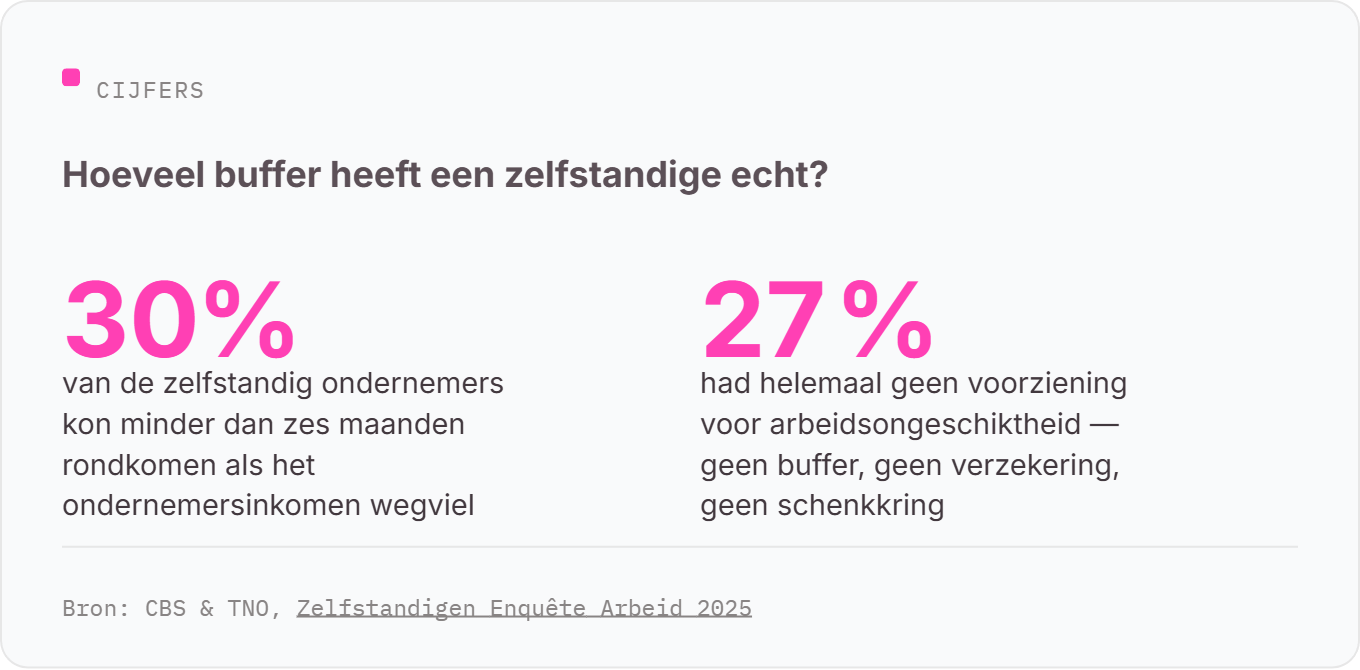
The 2025 Self-Employed Labor Survey by CBS and TNO shows just how varied that margin is. Of all self-employed entrepreneurs, 30% could make ends meet for less than six months if their business income were to disappear. At the same time, 27% had no disability insurance whatsoever. “I’ll cross that bridge when I come to it” remains an unwritten plan for many entrepreneurs.
Option 1: Let a financial buffer cover the short-term lull
A financial buffer is ideal for a week with the flu, a sprained ankle, or a short recovery period. The money is immediately available, and you don’t have to prove first that you’re unable to work. However, each euro can only be spent once.
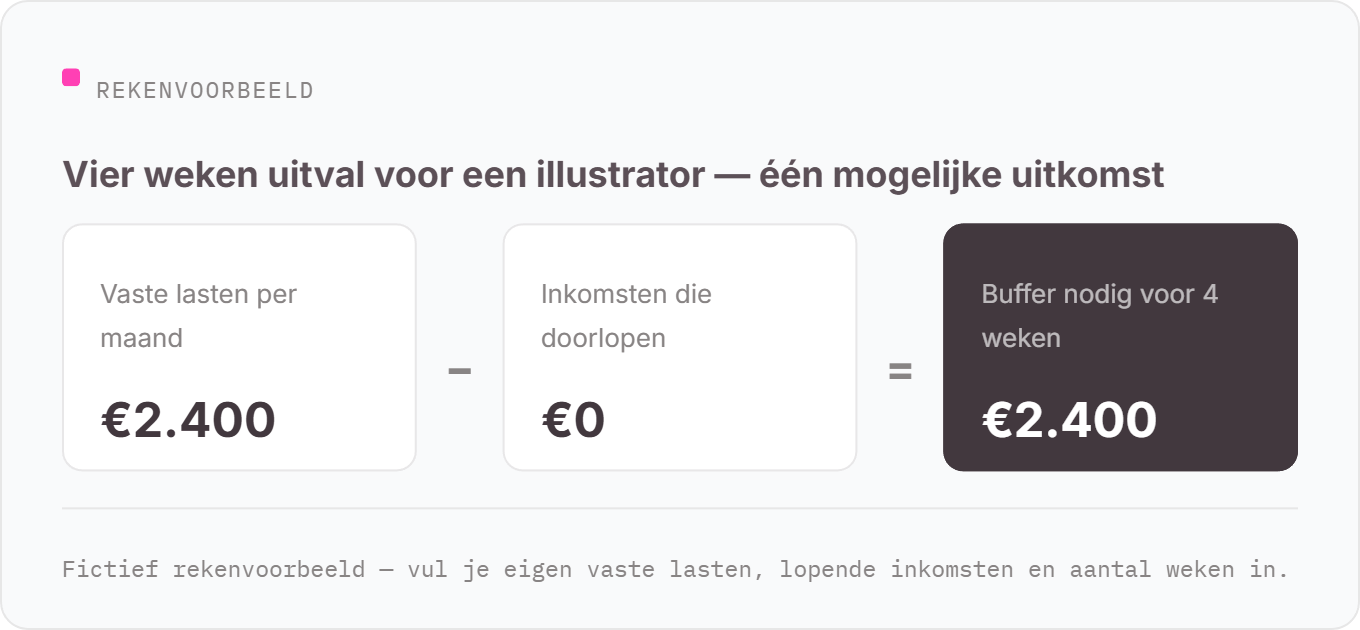
Start with your minimum monthly amount. Add up rent or mortgage payments, groceries, health insurance premiums, taxes that must already be set aside, and necessary business expenses. Subtract any income that comes in even without working new hours. Then divide the result by the number of weeks you want to be able to cover.
Suppose an illustrator needs €2,400 per month and is completely out of work for four weeks. In that case, €2,400 is the initial calculation threshold, regardless of tax implications and projects that can be made up later. If you’re out of work for two weeks, the loss isn’t automatically €1,200: a missed campaign could cost more, while postponed work might actually generate income later. So base your calculations on your own schedule.
In 2025, savings or investments were the most commonly cited resource among self-employed entrepreneurs, at 40.3%. If you want to build up a separate recovery buffer, you can take your time exploring savings options through Raisin on Oddny. Think of this savings plan as money for the first layer of protection, not as a replacement for coverage that needs to last for years.
Path 2: A “Broodfonds” or gift circle covers temporary illness
A “Broodfonds” or other gift circle operates on the basis of mutual support. Members set money aside and contribute an agreed-upon amount when someone is unable to work due to illness. This can be a good fit for a period that’s too long to cover with your own savings but doesn’t yet feel long enough to rely solely on insurance.
The time limit is important. According to KVK, a participant receives donations for a maximum of two years in the event of illness. In the gift circle described by KVK, the first month is typically considered a deductible period. The exact waiting period, amount, eligibility, and oversight vary by group. And “Broodfonds” is a brand name; not every donation circle is a Broodfonds.
Before joining, ask about four things: when do the donations start, what net amount will you receive, what happens if multiple members are sick at the same time, and when does the support end? Compare that to your actual expenses. A monthly donation that covers your housing costs but not your studio rent still leaves a gap.
A support circle is temporary reciprocity. It’s not a policy for permanent disability.
Option 3: Look into long-term disability insurance
Disability insurance, often referred to as AOV, is intended to cover loss of income when illness or an accident limits your ability to work for an extended period. The policy specifies when benefits begin, the amount covered, how disability is assessed, and when benefits end.
These are not just minor details. For a videographer with a shoulder injury, it makes a difference whether the insurer considers their specific profession or other work that may still be possible. The waiting period must also align with the layers of coverage above it. If you have a three-month buffer, you can consider a different deductible period than someone who runs out of coverage after just four weeks.
Oddny does not currently offer AOV coverage. Therefore, have a licensed advisor compare your income, occupation, and policy terms. Be sure to ask about the insured amount, the waiting period, partial disability, exclusions, and the maximum benefit duration.
If you’re transitioning directly from salaried employment or receiving benefits, be sure to also check the limited voluntary enrollment route through the UWV. For many new freelancers, there is a 13-week application deadline after mandatory employee insurance ends, plus additional conditions. This is therefore not a general safety net that every sick freelancer can join later on.
Option 4: Organize Your Work Before You Get Sick
Money buys recovery time, but continuity also stems from the way you work. A photographer who transfers files in an organized manner allows an editor to continue working. An architect who keeps track of contacts and decisions enables a colleague to step in more effectively. It doesn’t have to start on a grand scale.
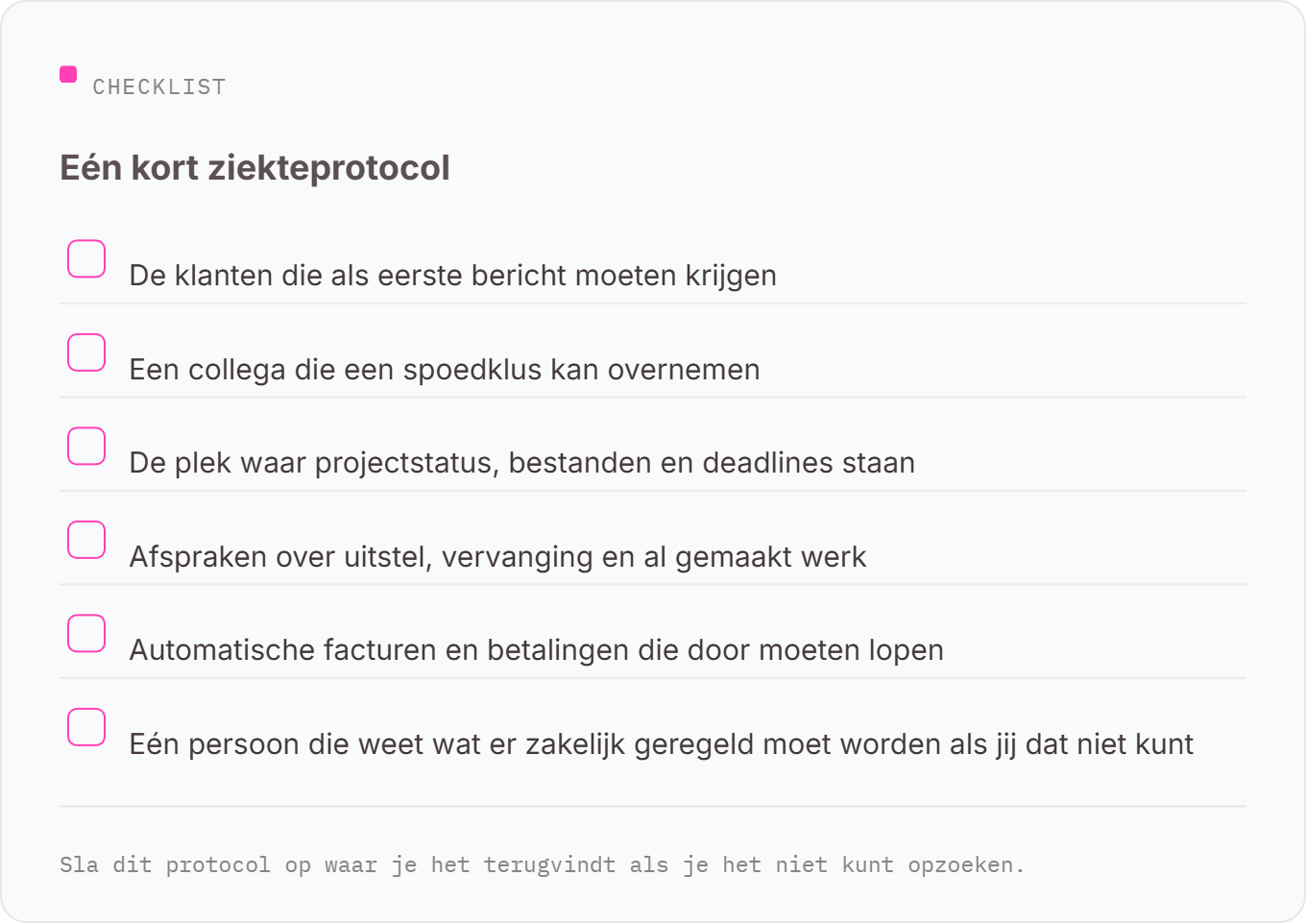
Create a brief sick leave protocol that includes:
-
the clients who need to be notified first;
-
a colleague who can take over an urgent assignment;
-
the location of project status updates, files, and deadlines;
-
agreements regarding postponements, replacements, and work already completed;
-
automatic invoices and payments that need to continue;
-
one person who knows what business matters need to be handled if you’re unable to do so.
Also consider prevention without turning health into a performance project. Plan for recovery after intense production weeks, set up your workspace properly, and take recurring pain seriously. You can’t prevent every illness. But you can prevent a single week of illness from turning into a search for passwords and client appointments.
Create a single timeline for your four scenarios
Map out the routes on paper as if you were planning production. What will carry you from day one through week four? What takes over if recovery takes months? What remains in place after two years? And who will practically keep your work together while you need to step away?
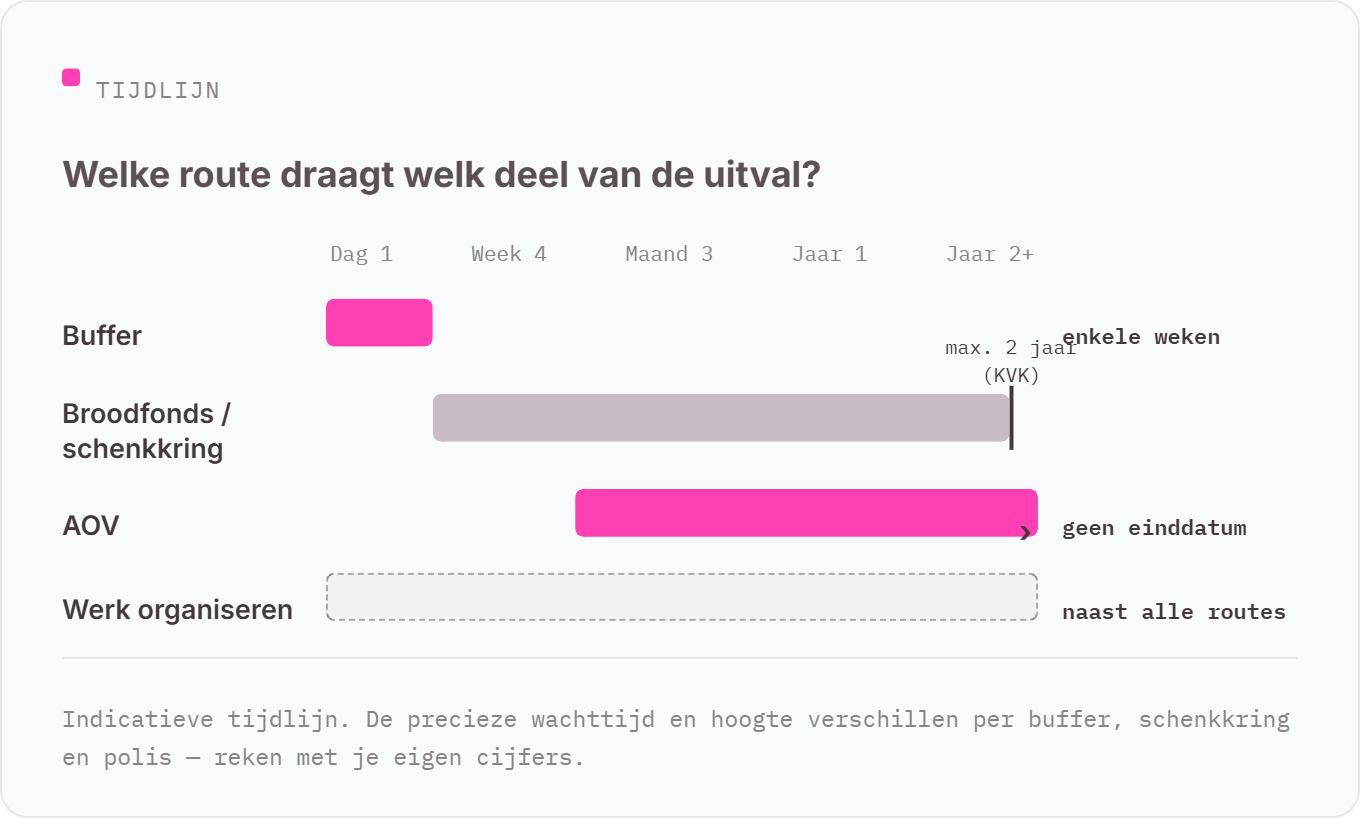
Perhaps your safety net consists of six weeks’ worth of savings, followed by a support network, and for long-term absence, disability insurance. Perhaps you have lower fixed expenses and choose a different allocation. There’s no one-size-fits-all combination. There is, however, a big difference between hoping that assignments are waiting and knowing exactly how much time you actually have.
Start small. Calculate today how much one month of rest will cost you and set that amount aside from your regular checking account. If saving is the first layer of your plan, check out the Oddny savings plan via Raisin and decide for yourself what amount fits your pace.
If you get sick as a self-employed person, your work can come to a temporary halt. A solid safety net prevents your recovery from having to compete immediately with the next invoice.