
PROOF OF GENIUS #10 Trix van der Grinten — The Art of Keeping on Playing
Some people make music. Others live music.
For Trix van der Grinten, music has never been just a profession. It is a way of seeing, listening, understanding, and above all: passing it on. From a curious girl who became fascinated by the structure of music to an inspired musician and teacher who has taught generations to listen.
This special portrait is about talent and dedication, but above all about something that’s hard to measure: the indestructible power of a passion that continues to resonate throughout a lifetime.
At a Glance
Creator
: Trix van der Grinten, singer, musician, and passionate music teacher.
Fields
of Expertise Classical music, voice, music education, and the development of musical talent.
Background
: Born in the United States, raised in Zuidlaren. Fascinated from a young age by the structure, beauty, and expressiveness of music.
Specialization
: Understanding, interpreting, and conveying music. Helping people discover their own musical voice. Recorder, piano, and voice.
Unfair Advantage
: An exceptional musical ear, curiosity, and the ability to recognize talent in others that they themselves haven’t yet discovered.
Ambition
: To continue passing on what music has given her throughout her life—not just knowledge and technique, but above all, the joy of discovery.
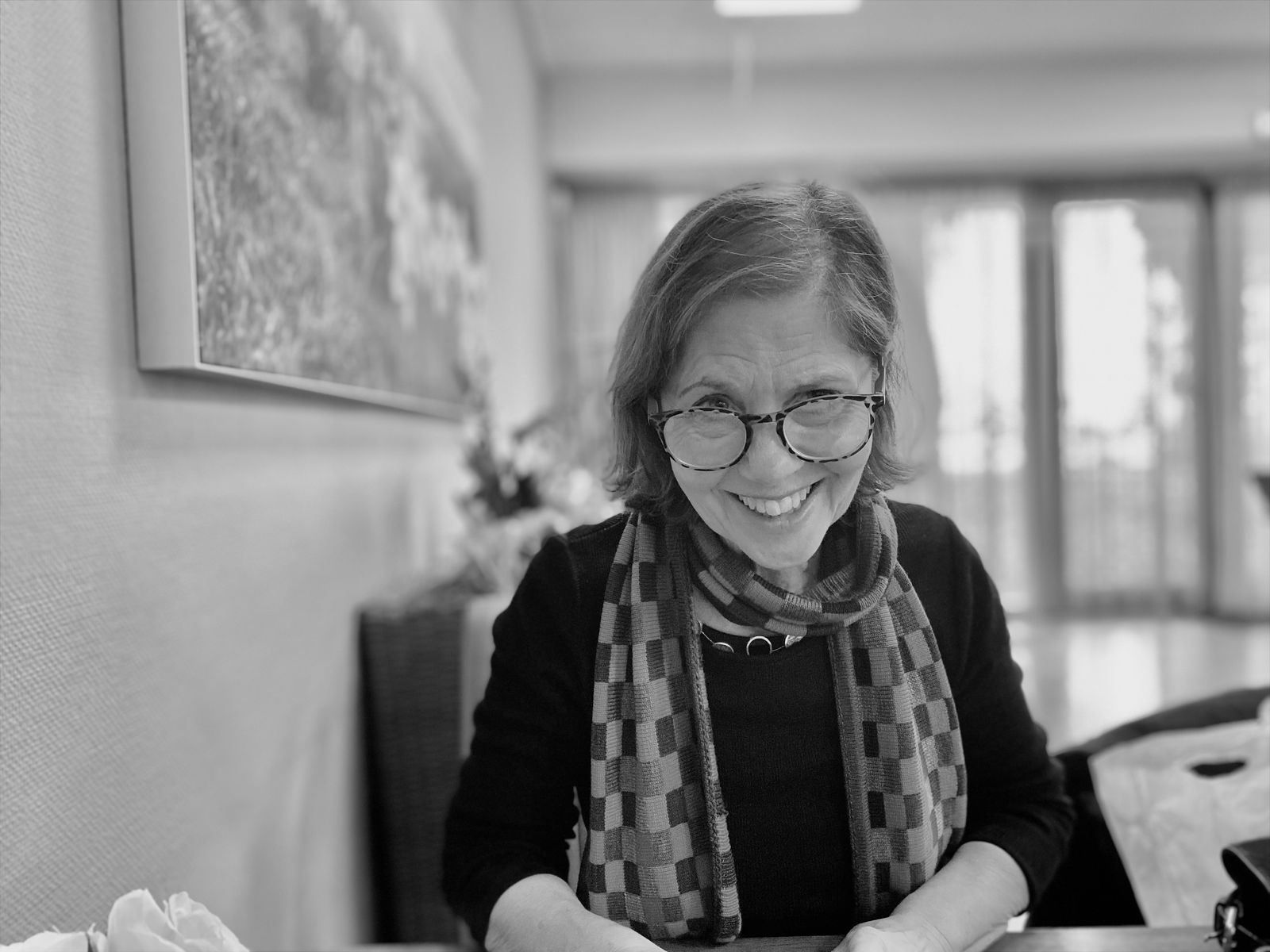 About music, courage, uncertainty, and the wondrous richness of a life shared with others.
There are people who devote their lives to music. And there are people for whom music has become their life. Trix van der Grinten belongs to the latter category.
We meet at the De Oever community center in Oudorp, near Alkmaar. Trix is retired—at least, officially. That afternoon, she’s teaching a music class to a group of seniors. She does so with such ease, as if there were no other way to spend an afternoon.
She begins with Vivaldi. Not just with a piece of music, but with the story behind it. How the composer wanted to make winter audible in *The Four Seasons*. How he had his violinists play with the wood of the bow instead of the horsehair, to make the biting cold almost tangible.
Trix tells stories. Asks questions. Listens. Explains things again. The participants listen attentively and are invited to think along, sing along, and above all, join in. First in canon, then in quodlibet, where—miraculously—different melodies can sound at the same time. And then something unexpected happens: Trix even manages to get a few participants to dance the Driekusman.
There’s laughter. Singing. Movement.
For nearly an hour, she lets people experience something that’s so easily lost as we get older: the joy of discovering something new. Not a single participant is left out. Every answer gets attention. Every bit of progress earns a compliment. She focuses on what someone can do, not on what someone can no longer do.
Trix is an attentive teacher. But that word doesn’t quite do her justice.
Here is someone for whom passing on knowledge isn’t just a job, but a way of life.
A childhood filled with music, without anyone intending it that way
Trix was born in the United States to Dutch parents. Her father, a gifted physicist, was brought to the United States shortly after the war. When Trix was four years old, the family moved to Zuidlaren. Her father became a professor of physics at the University of Groningen.
According to Trix, there wasn’t much to do in Zuidlaren. So she listened to the radio. A lot of radio. Especially classical music.
What she didn’t realize at the time was that she was learning something fundamental. Not just listening to melodies, but subconsciously understanding the structure of music—how a composition is built, how different voices relate to one another, and how sounds take on meaning.
She takes recorder lessons for six years. She now looks back on that with some skepticism. The recorder is cheap, sure, but it’s certainly not an ideal instrument for developing young children’s fine motor skills. Although you can play folk songs on it just fine. It’s typical of Trix that she also views her own musical upbringing with a critical eye. Nothing is sacred simply because that’s the way it’s supposed to be.
Meanwhile, at home, it’s a remarkable world. Radical art hangs on the walls—work that we might call “outsider art” today—alongside Japanese erotic paintings. But there are hardly any books. A Dutch teacher who comes for a home visit is surprised. How can a girl with such an obvious talent for writing grow up in a house without books?
Because Trix writes. Rhymes, stories, poems. Words apparently come to life just as easily for her as music does. Perhaps that is her first discovery: talent pays little heed to the circumstances in which it arises.
Head and hands. Is that all?
Halfway through our conversation, Trix makes a statement that almost knocks me off my chair.
“Music isn’t creative. It’s a reproductive art form. Actually, a craft.”
She says it without hesitation. According to her, anyone who performs music is, first and foremost, reproducing something someone else has conceived. You’re trained to do it better and better. And so you’re constantly told what’s not right.
But what about composing? Isn’t that the very essence of creation? That adds a bit of nuance to the matter. Still, she insists that for performing musicians, three things are ultimately central: your head, your heart, and your hands. That’s it.
I look at her and think of her own life. Of that of her husband, Hen van der Grinten, the acclaimed oboist and Prix d’Excellence recipient, co-founder of the Gemini Quartet, and a member of a family in which music and the visual arts are deeply rooted. All those years of studying, rehearsing, performing, and teaching.
Could you truly devote your life to music if it weren’t also an act of creation?
Is there something else at play here? The modesty of a professional who feels no need to call herself an artist—who knows how much work lies behind something that sounds effortless to a listener.
And isn’t that a form of genius in itself?: becoming so good at something that you no longer need to prove how extraordinary it is.
The Quiet Strength
Trix recounts how, as a young girl, she fled her parents’ home in Groningen. She applied for a job at a nursing home in Scheveningen. There, to her great joy, she found a connection with people from the Indonesian community. A whole new world opened up to her.
She speaks of the quiet strength. Of the magic that cannot be proven, but which, in her view, is very much real. In encounters. In people. In coincidences that, in hindsight, hardly seem coincidental at all. “You have to be open to it. We’ve pretty much unlearned that.” She says it as if it were the most natural thing in the world.
Her work in Scheveningen brings her not only cultural enrichment but also something very practical: financial independence. That’s a lesson she’s eager to pass on to young musicians and artists.
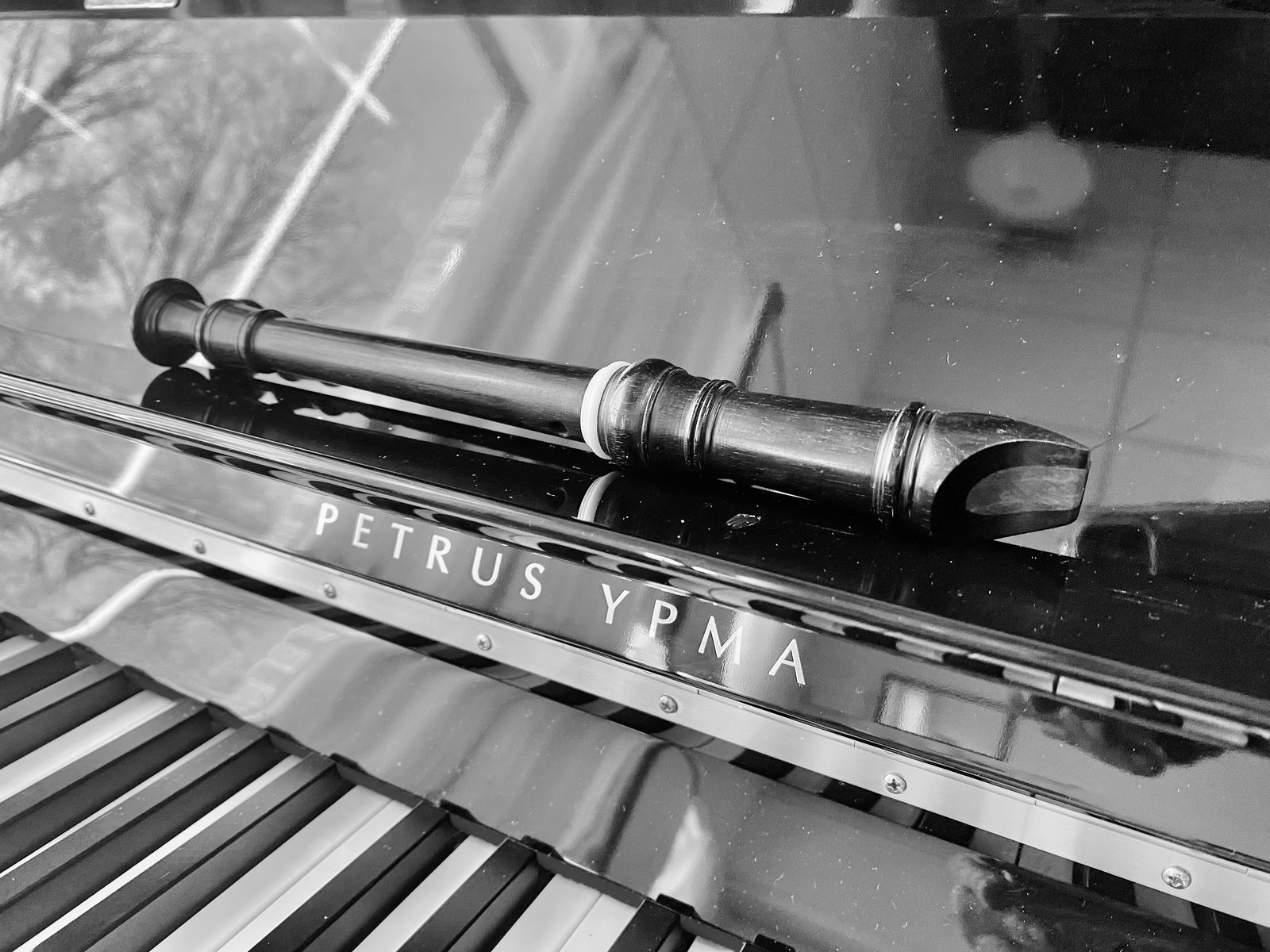
Make sure you’re financially independent.
Not because money is so important, but because freedom is. Because anyone who becomes completely dependent on the proceeds of their talent may just lose the freedom to truly develop that talent.
Trix knows the art world from the inside out. She earned one teaching degree after another. At the conservatory in Alkmaar, she met Hen, who would later become her husband. His family is connected to the famous Andriessens, a lineage of composers, musicians, and visual artists. She knows what dedication requires—and what it yields. “Forget about getting rich from it,” she says of a life in music. “With a few exceptions.” Then comes the sentence that really sums it all up:
“You can still feel rich.”
Uncertainty is part of the deal
Trix isn’t one for offering reassuring advice. Anyone who asks her what a young talent needs to do to succeed won’t get a romantic story about chasing dreams and, above all, believing in yourself. At least, not without conditions.
Anyone who wants to excel must accept that they’ll never be completely in control. That the process of learning never ends. That you must constantly question yourself. Uncertainty isn’t a temporary obstacle on the path to mastery. Uncertainty is part of mastery. And then… then there’s humor—her most important piece of advice?
Keep smiling. Especially when you stumble. See the funny side of your failures. Take your work seriously, but don’t take yourself too seriously. Because you will fall. More often than you’d like.
What also concerns her is our tendency to place everything and everyone in a hierarchy: better, higher, more successful, more important. The art world is no exception. On the contrary.
But how do you measure the value of a musician? In awards? Applause? Money? Or in what happens when, thanks to you, someone discovers something they never thought possible? Trix unquestionably chooses the latter.
Without social engagement, without a connection to others, she believes it’s ultimately of little value. Art only becomes truly meaningful when it sparks something between people.
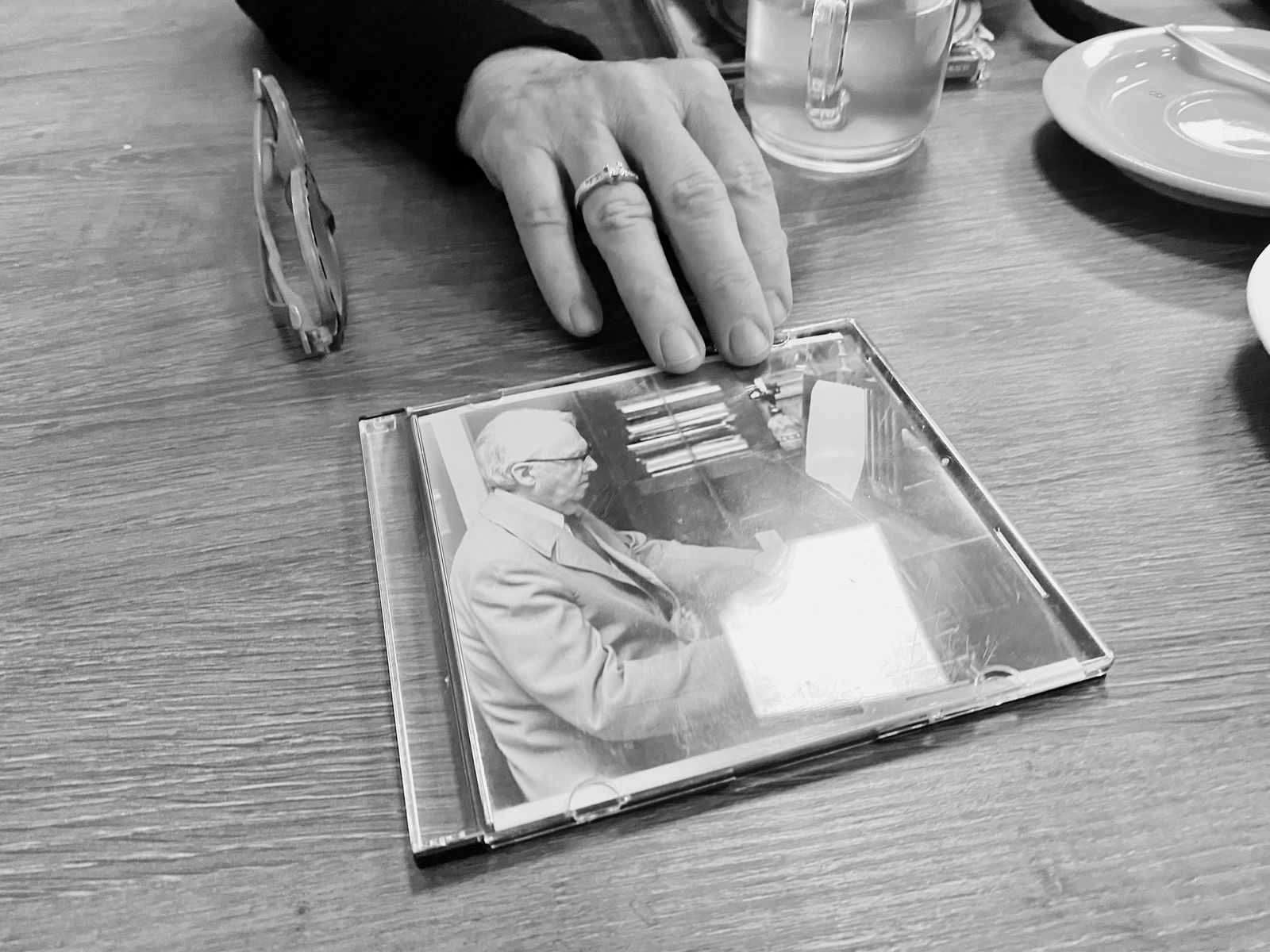
The Miracle of Trix
At the end of our conversation, she returns to something that apparently still surprises her. She has said “no” many times in her life. Against expectations, against what was taken for granted, against paths that others might have considered wiser. She has made choices, taken risks, and learned that not everything goes as you hope.
And yet.
Despite everything, she still derives intense pleasure from making music. From writing poetry. From teaching. From discovering something beautiful together with others. She speaks of it with a sense of wonder that is entirely genuine. As if she still finds it a miracle herself.
I’m reminded of what I saw earlier that afternoon.
A woman who is officially retired, but not from her curiosity. Who keeps explaining, asking questions, and giving compliments. Who doesn’t hoard her knowledge as something she has acquired, but shares it as something that only has value when others are allowed to share in it.
She no longer has anything to prove. And yet she gives her all.
That’s what moves me most about this encounter. Not her impressive musical history, not her unconventional views on creativity, not even her lifelong dedication. But the fact that, after all these years, she can still derive so much joy from the joy of others.
I can picture her again, in that community center in Oudorp. Amid the chairs, the voices, and the people who, for a moment, don’t have to worry about their age, their limitations, or their place in the world. They’re singing. And a moment later, they’re dancing. Not because they have to. Because Trix has made them feel that they can still do it.
To young creators, I’d therefore like to share one thought from this conversation: don’t let anyone convince you that your worth is determined by the place others assign you in their hierarchy. Keep learning, keep questioning, maintain your independence, and above all, don’t lose sight of the people around you.
And believe in yourself. Not because success is guaranteed, but because no one else can carry that belief for you. After all, isn’t the greatest talent ultimately not what you can create yourself? But what you manage to bring to life in others.
That is Trix’s genius. And it continues to resonate long after the music has ended.
https://blokfluitpagina.nl/blok-docenten.htm