PROOF OF GENIUS #07 — HOSPITALITY
When a City Becomes Your Canvas
Is Leiden his canvas?
Beau Artist laughs at the question. Neither he nor his girlfriend has a driver’s license. With two kids, a lot of their life happens on the cargo bike. As a result, a significant part of his world unfolds within the city. Maybe he should have spent a year in New York first, he says. But why, really? In his view, Leiden deserves just as much diversity in places, people, and experiences.
Beau is now involved with four restaurants and bars in Leiden. Not four versions of the same successful concept. On the contrary. Every place has to be different, because every environment is different. Copy-paste is out of the question right now. As the conversation progresses, it slowly becomes clear that Beau might not be designing hospitality businesses at all. He’s building environments where people can feel at home.
At a Glance
Creator
Beau Artist, creative artist and hospitality entrepreneur.
Field
of Work: Four different hospitality venues in Leiden.
Background
: Art & Economics; raised in a multicultural environment with a background in psychology, art, and culture.
Specialization
: Hospitality, concept development, and creating social environments.
Unfair advantage
: Curiosity. And a quick sense of whether a place has a soul.
Ambition
: To create spaces that truly add value to the city and where people from all walks of life feel welcome.
Growing Up Amid Different Worlds
Perhaps it all starts at home.
Beau grew up with a Surinamese father who is a psychiatrist and a Dutch mother who works in the cultural sector. His brother became a psychologist. As a result, different cultural perspectives, human motivations, art, and culture aren’t separate worlds that he’ll have to bring together later on. They’ve been there from the very beginning.
In hindsight, his decision to study Art & Economics seems almost logical. It’s precisely the intersection where he would later find himself: between imagination and feasibility, between culture and commerce, between wanting to create something and ensuring it can actually exist.
That combination constantly emerges in his work. Because when you ask Beau what he actually creates, he has to think for a moment. A restaurant? An interior? A brand? Not really. Perhaps, he says, he mainly creates an environment where a wide range of people can temporarily feel at home. A place where you can step away for a moment from everything happening outside. Good food and drink are naturally part of that. As an entrepreneur, you have to pour just as much love into that. But food, drink, music, lighting, furniture, art, and service are ultimately parts of something bigger. Perhaps Beau is a set designer, playwright, and director all at once. Only here, the audience itself plays the leading role.
A concept must have a soul
Beau claims he can tell within thirty seconds whether a hospitality concept has a soul. The menu. The interior. Who’s sitting there. How many chairs have been placed in a given area. What’s hanging on the wall. How the space relates to the people. Whether everything fits together or seems contrived. That quick judgment doesn’t come from a checklist.
According to him, you get better at it by really looking. Not just looking, but seeing. Just as hearing isn’t the same as listening. That may sound simple, but according to Beau, that’s precisely where an important difference lies between people who follow a formula and people who understand a place.
That’s why his own projects don’t start with a catalog from which to choose furniture, lamps, and colors. Beau looks around, gathers things that move him, and then composes an interior. Mid-century design aligns closely with his personal taste. But taste alone isn’t enough. A space must fit the building, the neighborhood, the people who use it, and the character that can emerge there. And it must be able to continue to evolve.
Copy-paste is out of the question
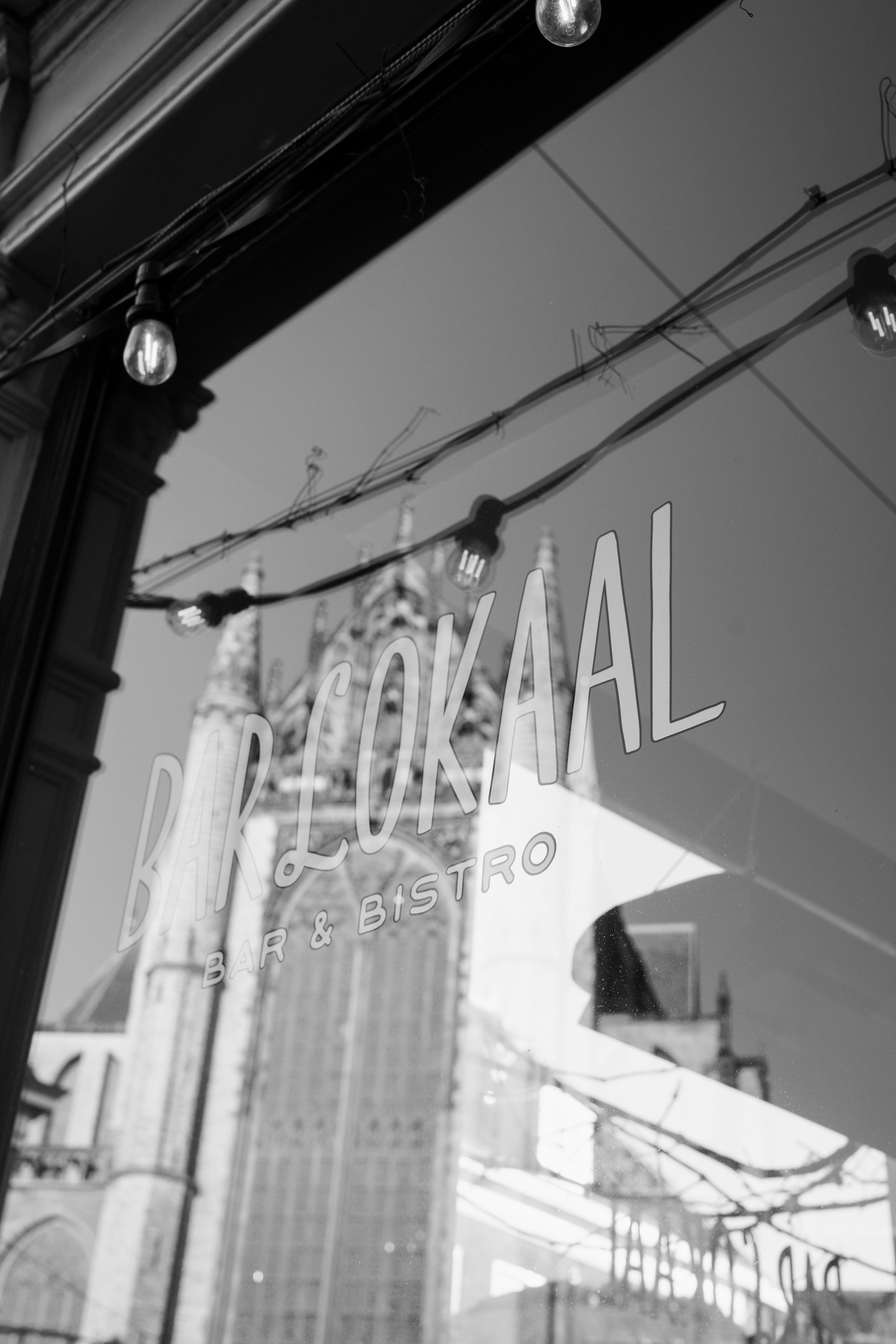
The fact that Beau now has multiple businesses doesn’t mean he’s developing a formula that can be endlessly replicated. Quite the opposite. Each business is given its own character. The environment in which a space is located plays a key role in this. The same applies to the menu, the team, the music, the clientele, and the design.
For Beau, diversity isn’t just a buzzword. It’s part of his way of working. His interest in other people, cultures, crafts, and forms of authenticity suits him, as he himself says, like a glove. Even the walls play a part.
For the art in his spaces, he asks Joosje Bosch to take on the curation. Because even a wall is more than just a place to hang something decorative. Beau sees it as a frame. Perhaps even as a replacement for the screen through which we now spend hours each day looking at the world. Here, something real is on display. You can walk around it. Look at it together. Form an opinion about it. Or not pay any attention to it at all because the person across from you is more interesting.
The greatest compliment: a phone that stays put
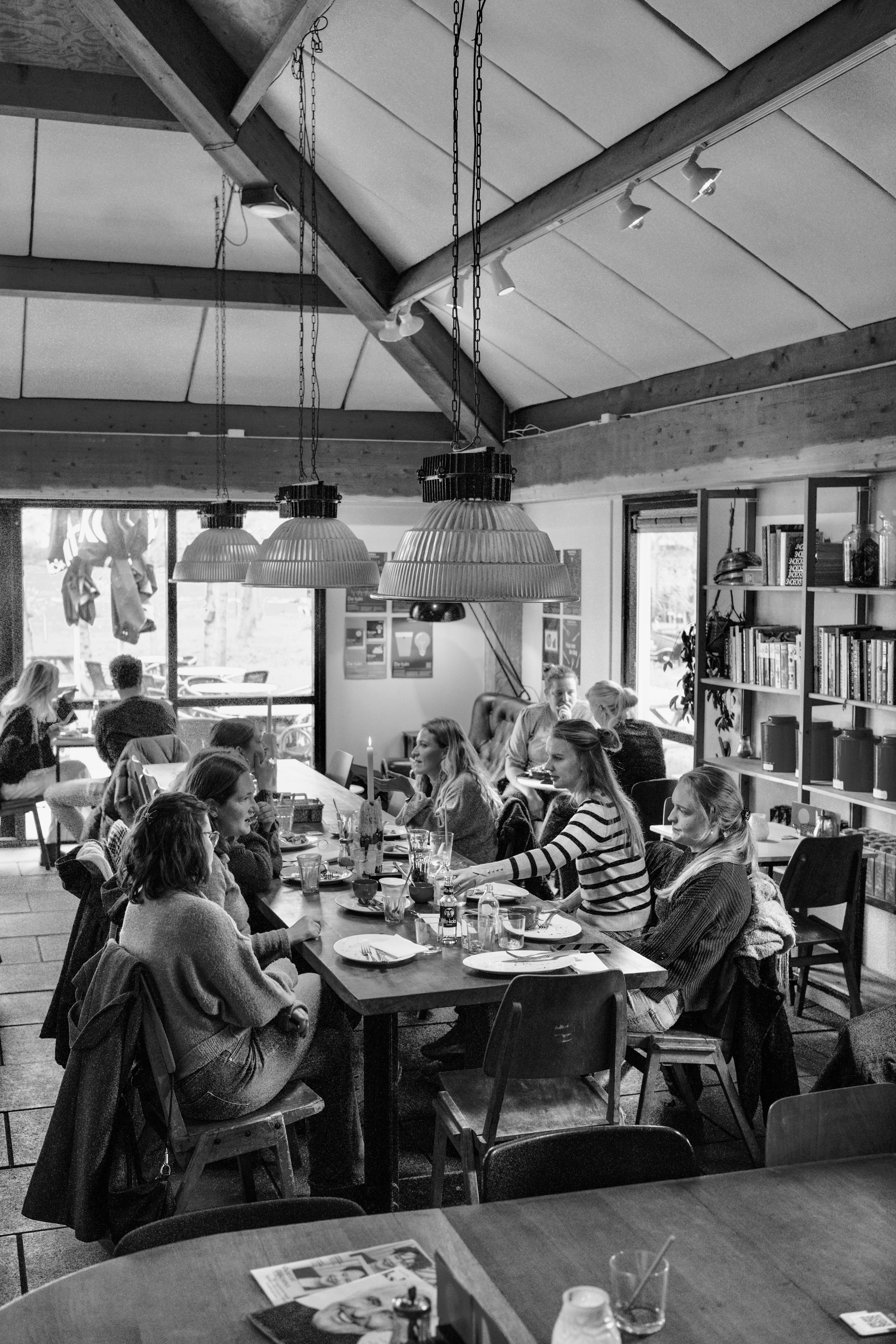
For Beau, there’s a remarkable indicator of a successful place: guests who aren’t constantly looking at their phones—or who leave their laptops closed. Don’t get him wrong: there’s no ban. Some restaurants and bars make a conscious choice to do that, but Beau doesn’t. It’s precisely the voluntary nature of it that makes it interesting. When people naturally forget about their screens, something else is apparently happening that holds their attention sufficiently.
A conversation. The space. Other people. Simply the feeling that you enjoy being there. Beau has started experimenting with this himself. More and more often, his phone stays at home, in a drawer. He loves it.
At a time when virtually every business is trying to draw as many minutes of our attention as possible toward a screen, Beau is creating spaces that are actually successful when the screen disappears for a moment.
Hospitality as Social Design
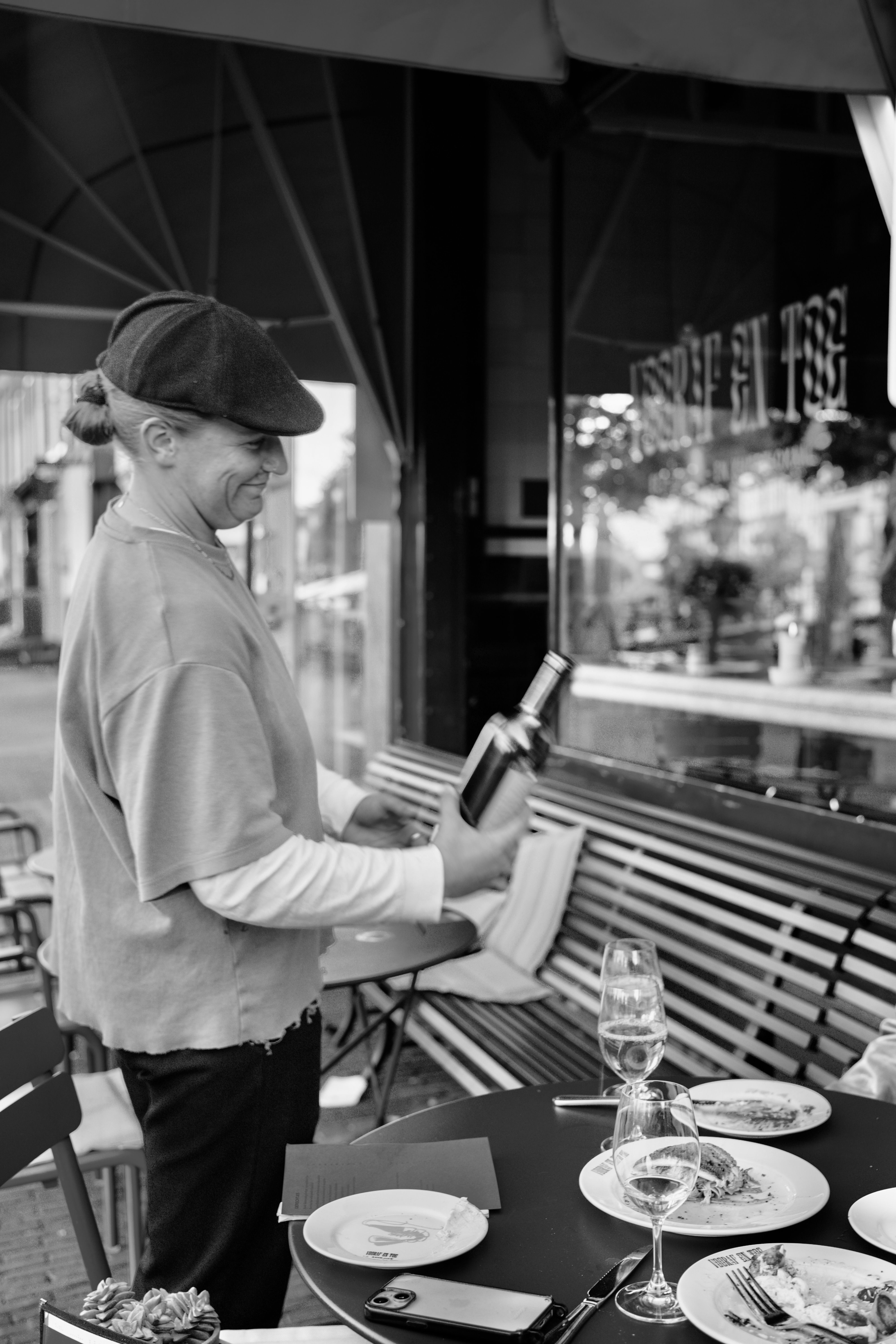
The English word “hospitality” sounds business-like. In Dutch, we have a much nicer word: “gastvrijheid.” However, anyone who actually tries to organize hospitality discovers just how complicated it is. Who feels welcome somewhere? Who doesn’t? How formal is a place? How is someone greeted? What does something cost? What music is playing? Who works there? Which people walk in, and which people think as soon as they reach the front door: “This isn’t for me”? In this way, the hospitality industry almost imperceptibly takes on a social dimension.
A well-run hospitality venue is a small social world. Very different people voluntarily spend some time together in the same space. They eat, drink, talk, work, observe one another, and meet acquaintances—and sometimes strangers. Beau finds this a fascinating phenomenon. Is the way we organize hospitality in a restaurant or café even a small blueprint for our society? Because how hospitable are we, really?
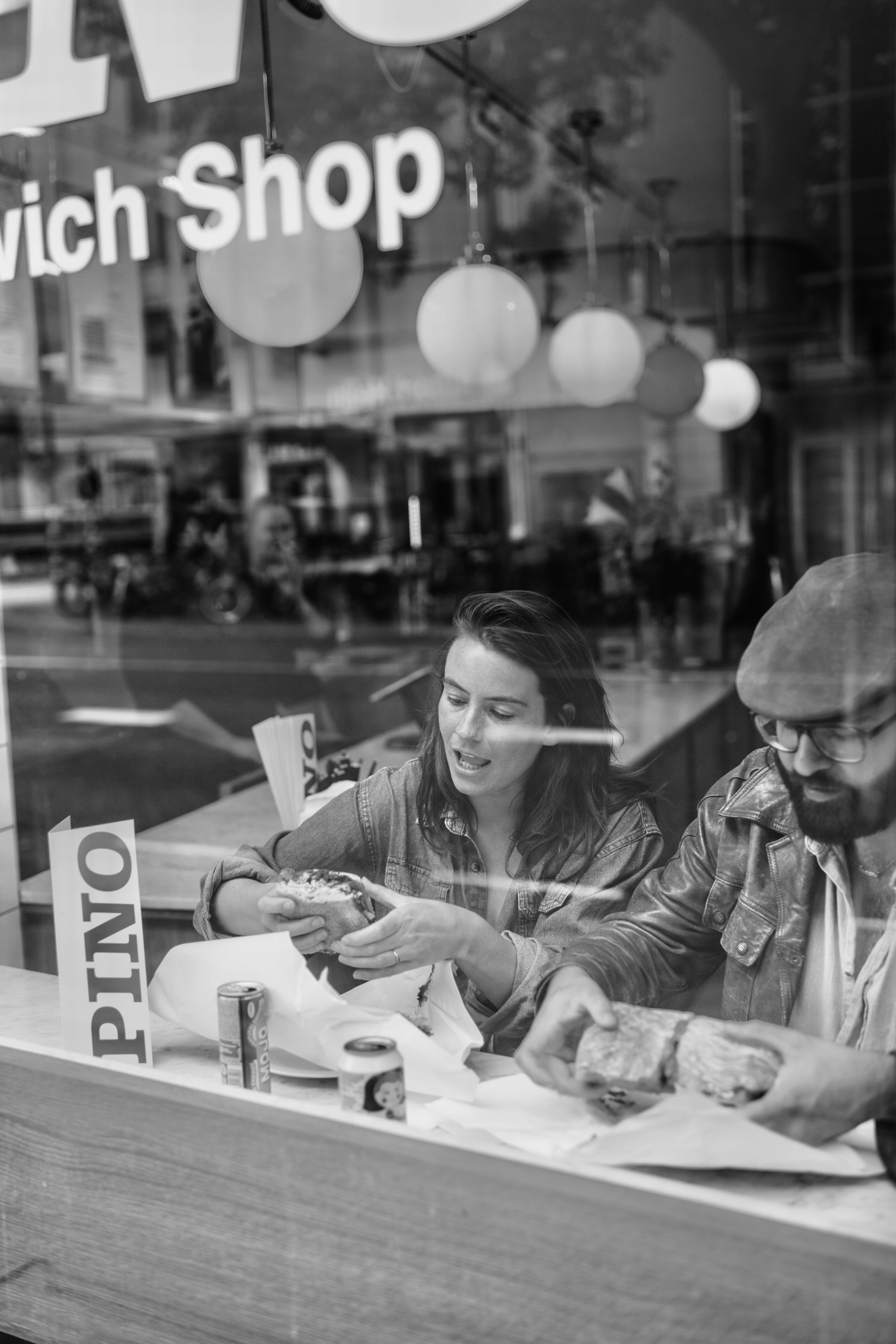
A team is not a machine
That idea doesn’t stop with the guests. Beau’s team grows along with his businesses. Yet he tries to maintain something of a family-like atmosphere within it. People know what’s going on in each other’s lives. Personal matters aren’t completely separated from work. Ups and downs are part of life—and therefore part of an organization as well. The same goes for mistakes. A “zero-tolerance” approach doesn’t fit here. When a mistake happens, it’s discussed. You try to understand what happened and what can be learned from it. That doesn’t mean everything is without consequences. Quite the contrary. Delivering good work and taking responsibility remain important, but according to Beau, fear is not a particularly productive way to build an environment where people dare to be themselves.
And that’s where the connection with the guest comes back into play. When a team feels joy, trust, and engagement, the audience notices it. When guests visibly feel at ease, the team, in turn, draws energy from that. Hospitality works both ways.

Pathologically Curious
When Beau started his first business, he already had several years of experience in the hospitality industry. Still, he had a tremendous amount to learn. He doesn’t mind that. Perhaps, as he puts it himself, he’s pathologically curious. He learns by doing and has no trouble approaching people. Asking questions of someone who knows a lot more about something costs nothing. And according to Beau, if you show genuine interest, you’ll discover just how surprisingly often people are willing to share their knowledge. You might get a “no,” but you can also get a “yes.”
It still amazes him how many doors open when curiosity isn’t used as a ploy, but stems from a genuine interest in what someone else creates, knows, or has achieved. Curiosity is therefore more than just a personality trait. It’s his research method. Observe. Ask questions. Listen. Try things out. Make mistakes. Observe again.
Welcome to the slippery ice
Thanks to his degree in Art & Economics, Beau was already aware of the famous gap between creative education and economic reality even before he became an entrepreneur.
And yet. When you actually get started, you’re on treacherous ice. That’s why he has some pretty clear advice for young creators who want to start a business: above all, don’t assume your business case is sound. Not because a business case is pointless. On the contrary. You have to do the math, run through scenarios, gather information, and try to understand what you’re getting into. But reality doesn’t stick to Excel.
Something always happens that isn’t listed in row 38 of your spreadsheet. A renovation ends up costing more. A permit takes longer to process. Staff members drop out. A product doesn’t sell as well as expected. An idea everyone is convinced of doesn’t work. Something no one expected much from ends up being a hit.
That’s why you should talk to people who’ve already been through it, says Beau. Ask them where they misjudged things. What they’d do differently in hindsight. Which mistakes cost money. What kept them up at night. Be curious before the bill arrives.

Entrepreneurship Without Losing Sight of the Creator
As the saying goes, a well-prepared person is worth two. For Beau, that could easily be three or four—especially when you’re starting out as a young creator. Ignorance is romantic as long as there’s little at stake. But as soon as rent, salaries, investments, and suppliers need to be paid, that same ignorance can cost you your dream. And he thinks that’s a terrible shame.
The remarkable thing is that this business reality doesn’t make him any less of a creator. Entrepreneurship becomes part of the creative process. After all, an idea is only interesting if it can exist. You can imagine the most beautiful setting in the world, but someone has to draw up the budget. Order a table. Fill out a schedule. Call a supplier. Check an invoice. Have a difficult conversation. Make sure the doors can open again tomorrow. Creativity and entrepreneurship are therefore not at odds with one another. One keeps the other alive.
Sometimes a dishwasher, sometimes a director
Beau still gets a thrill when he walks into one of his restaurants. His role is constantly changing. Sometimes he’s in the kitchen. Sometimes on the floor. Sometimes he helps wash dishes. At other times, he’s an administrator, an entrepreneur, or a discussion partner during a team meeting. Perhaps there’s something essential to that. He has no desire to hover above the system he’s helping to build. He wants to stay right in the middle of it.
Seeing what works. Sensing what doesn’t. Moving a chair. Talking to someone. Changing a detail. Because for Beau, a restaurant is never truly finished. As soon as you think the concept is complete and just needs to be implemented, the very thing that made the place interesting is in danger of disappearing. Life itself.
Learning must never stop
This brings us back to curiosity. For Beau, the learning process doesn’t stop once you’ve become an entrepreneur, hired staff, or are running multiple successful businesses. Perhaps that’s when it really begins.
Because every new location raises different questions. Every team works differently. Every generation of guests brings new habits with them. A city changes. Cultures change. What seemed self-evident yesterday may feel contrived tomorrow. Those who stop learning shut themselves off from that. And that’s exactly where Beau draws the line. When learning stops, something begins for him that looks suspiciously like failure. Not because everything has to keep getting bigger. But because standing still doesn’t suit someone who’s curious about people and the world around him.
Why This Matters
We tend to talk about the hospitality industry in categories. Good food. Beautiful decor. Great location. Strong concept. Friendly service. Beau shows that an interesting hospitality venue emerges from the connections between these elements. A chair isn’t just a chair. A menu isn’t just a list of items. An employee isn’t a cog in a production process, and a guest isn’t a transaction at table seven.
Together, they temporarily form a social environment. This is where his education in Art & Economics suddenly comes into play in an unexpected way. Art teaches you to observe, visualize, and assign meaning. Economics forces an idea to relate to reality. Psychology and culture have been part of his background since childhood.
Beau doesn’t bring these worlds together theoretically. He uses them to build spaces. Spaces where people eat and drink, certainly. But above all, spaces where they meet one another, sometimes forget their phones, and feel like part of a small community for a few hours. And that is probably precisely the Proof of Genius of Beau Artiste: he doesn’t design restaurant concepts, but rather environments where people enjoy simply being human.
The city isn’t his target market in this regard.
It is his canvas.