PROOF OF GENIUS #05 — CRAFT en de moed om te maken
De ziel van het object
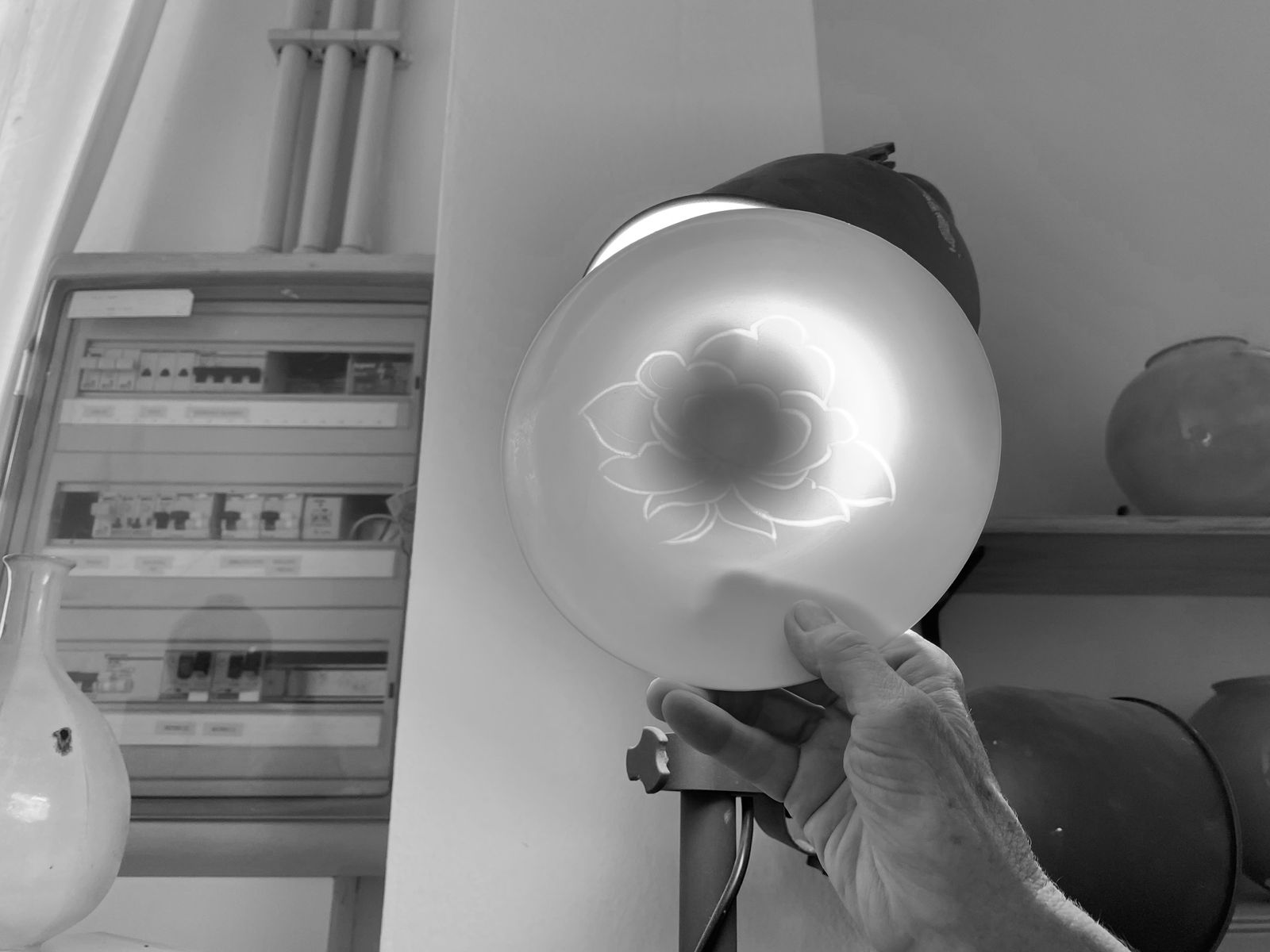
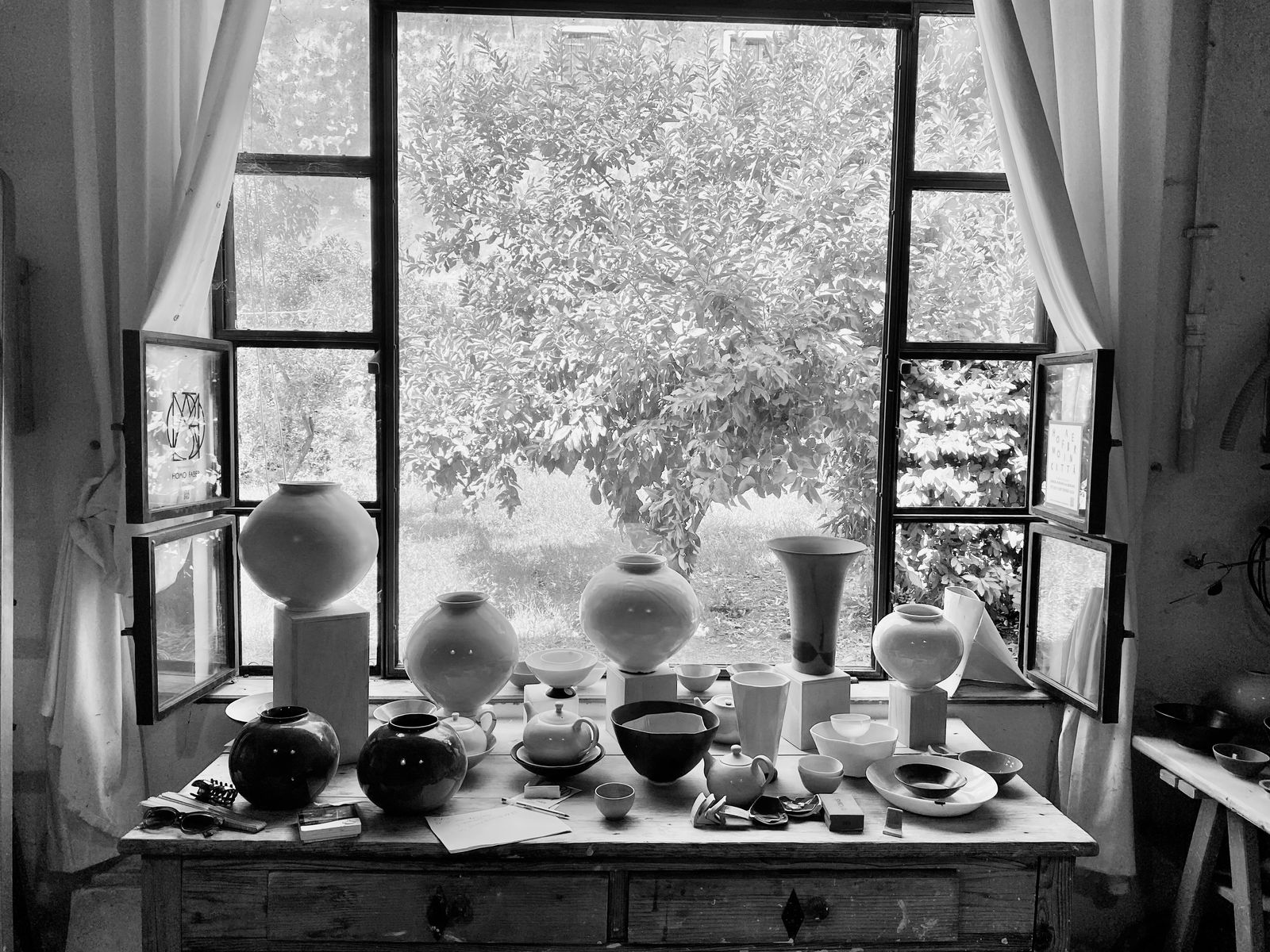
Nergens wordt Stefanelli’s verhouding tot controle en overgave zo zichtbaar als in het glazuur. Klei en porselein vormen het lichaam. Het glazuur is de tere huid: de plek waar het object ons ontmoet.
“Het glazuur is de huid,” zegt ze, terwijl ze verschillende stukken oppakt en me uitnodigt ze aan te raken. “Voel maar.”
Plotseling is kijken niet meer genoeg. De oppervlakken verschillen bijna onmerkbaar: glad, stroef, zacht, droog, sensueel. Kleur en textuur worden één. Zelfs met gesloten ogen blijft het karakter van het object voelbaar.
Ik vraag haar welk deel van het object zij zelf zou zijn, als ze moest kiezen. Haar antwoord komt meteen: het glazuur. Want als glazuur de huid van het object is, dan is het volgens haar symbolisch nog iets anders. “Het glazuur is de ziel van een stuk.”
Het is een prachtig veelzeggend onderscheid. De klei geeft het object zijn lichaam. De handen geven het vorm. Maar het glazuur geeft het karakter, aanwezigheid en misschien ook zijn mysterie. En juist het glazuur is het element dat een maker nooit volledig kan voorspellen. Hitte, chemie, materiaal, ervaring en toeval komen samen in de oven. Stefanelli kent haar materialen door en door, maar wat eruit tevoorschijn komt, staat nooit volledig onder haar controle.
Misschien is dat precies waarom glazuur haar zo fascineert. Het bevindt zich op de grens tussen meesterschap en overgave. De huid is wat we aanraken; de ziel is wat we ontmoeten.
Wanneer de wereld het atelier binnenkomt
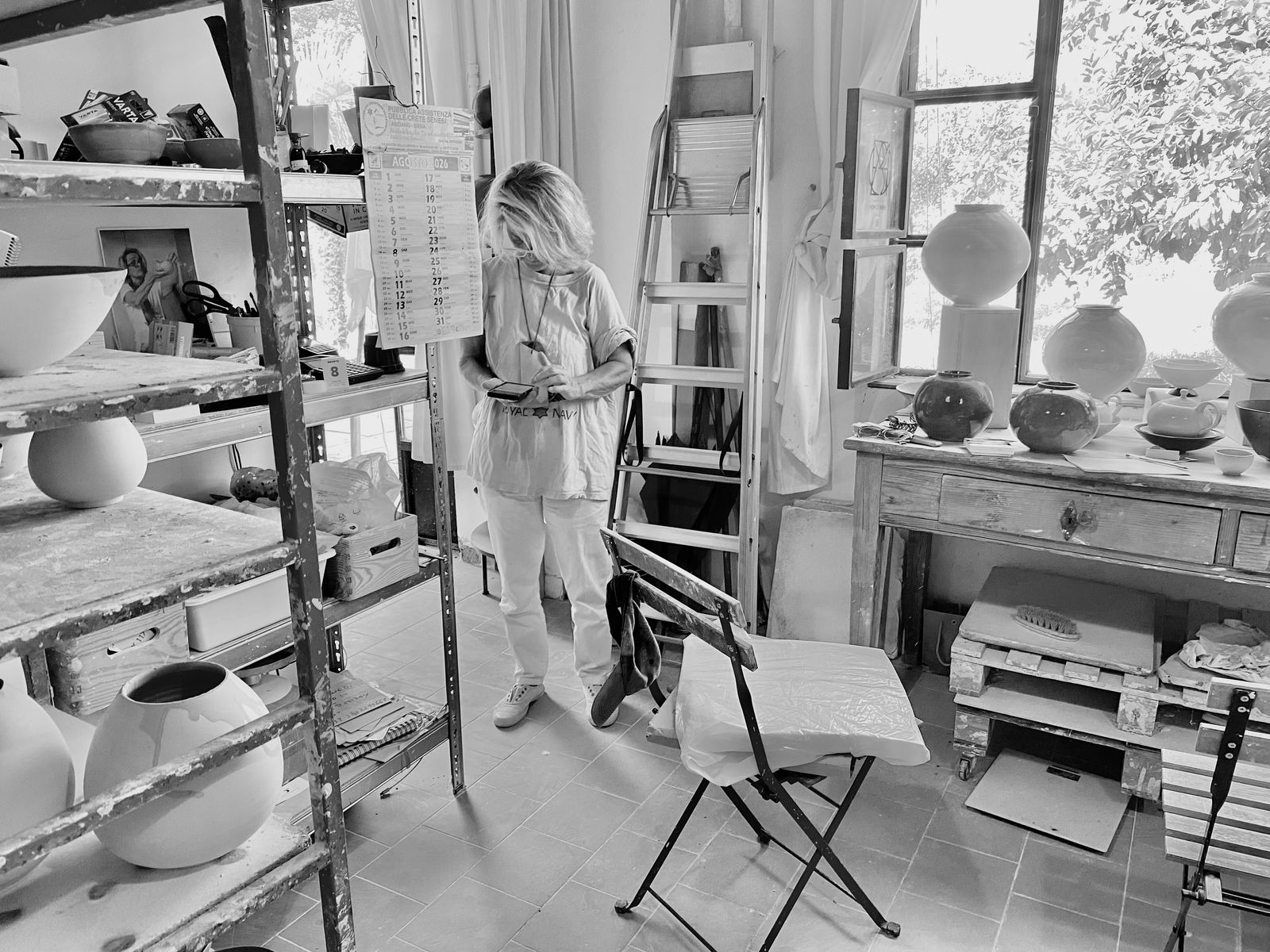
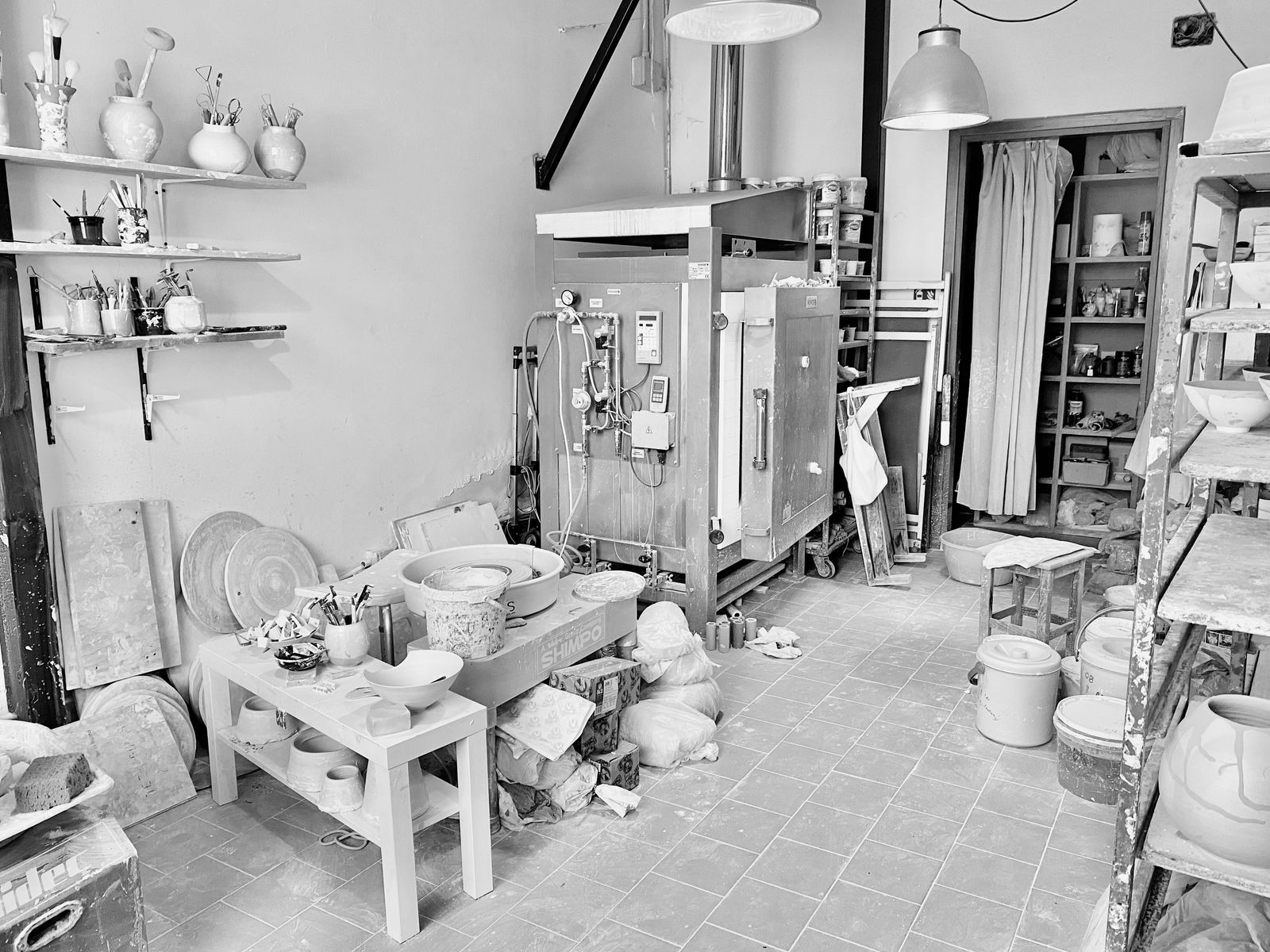
Zelfs het meest onafhankelijke atelier kan zich nooit volledig aan de buitenwereld onttrekken. Er zijn bezoekers, verkopen, belastingen, verzekeringen, aansprakelijkheid en regels. Stefanelli koestert weinig romantische gevoelens voor die kant van het makerschap.
Op het moment dat ze in haar atelier een workshop geeft in plaats van alleen haar werk te verkopen, legt ze uit, verandert de juridische aard van wat ze doet. Er ontstaan andere verantwoordelijkheden, andere vormen van aansprakelijkheid, andere regels. “Ik besteed dat allemaal uit aan een accountant. Het maakt me somber en leidt me af van mijn werk. Eerlijk gezegd vind ik veel van die regels gedachteloze onzin.”
In die irritatie zit een fundamenteler punt: creatieve onafhankelijkheid vraagt om infrastructuur. Een maker wil misschien niets liever dan de vrijheid om te maken, maar die vrijheid bestaat binnen een wereld van belastingen, verzekeringen, contracten, veiligheidseisen en regelgeving — systemen die doorgaans zijn ingericht rond heldere categorieën die lang niet altijd passen bij de beweeglijke werkelijkheid van een kunstenaarspraktijk.
Die systemen negeren laat ze niet verdwijnen. Maar ze te veel aandacht laten opeisen, heeft óók een prijs.
Toen Stefanelli haar atelierpraktijk opnieuw opbouwde, gaf haar accountant haar een volkomen logisch, klassiek zakelijk advies: doe marktonderzoek. Ze glimlacht bij de herinnering. Ze sloeg het advies af. “Er is een innerlijke overtuiging. Dáár vertrouw ik op. En op de een of andere manier werkt het dan. Werken, werken, werken.”
Het klinkt bijna uitdagend oncommercieel. Maar uit de mond van Stefanelli is het allesbehalve naïef. Ze heeft commercieel succes gekend. Ze weet wat een markt een maker kan geven. Belangrijker nog: ze weet wat die markt ook kan afnemen. De markt mag het werk vinden; hij hoeft niet te bepalen waarom het werk bestaat.
De maker: meesterschap zonder de nieuwsgierigheid op te geven
Stefanelli’s loopbaan laat zich moeilijk vangen in het conventionele verhaal van een carrière die zich voortdurend in één richting ontwikkelt. Ze leerde een ambacht, werd succesvol, breidde haar productie uit, stopte, bouwde een totaal andere loopbaan op, keerde terug naar keramiek, ging opnieuw naar China om verder te leren en begon weer een atelier.
Als rechte lijn is het nauwelijks logisch. Als het leven van een maker klopt het volkomen.
Op ieder moment lijkt ze vooral datgene te hebben beschermd wat voor haar het belangrijkst is: de mogelijkheid om werkelijk nieuwsgierig te blijven naar het werk. Dat verklaart ook waarom ze er nu bewust voor kiest alleen te werken. Niet omdat andere mensen er niet toe doen, maar omdat afzondering de concentratie creëert waarin ze kan luisteren — naar een idee, naar een materiaal, naar een oppervlak, naar dat bijna onmerkbare moment waarop iets onverwachts begint te gebeuren.
Ze heeft al bewezen dat ze méér kan produceren. De vraag is nu hoe ver ze kan komen door juist mínder te maken.
Audentes fortuna iuvat
Een nieuwe fase dient zich aan. Stefanelli wordt ouder en wil zich nog sterker op haar werk concentreren. Er zijn tentoonstellingen waaraan ze zich al heeft verbonden. Daarna misschien minder vormen: een kleiner aantal objecten dat ze kan blijven maken, zodat ze steeds dieper kan doordringen tot wat haar het meest fascineert — de harmonie tussen vorm en glazuur.
Reductie niet als terugtrekking, maar als concentratie.
En helemaal stoppen? De uitdrukking op haar gezicht maakt de vraag bijna absurd. Natuurlijk niet.
“Het geluk helpt wie durft,” zegt ze. Dan herinnert ze zich hoe haar moeder het vroeger, iets eleganter, formuleerde wanneer Stefanelli in moeilijke momenten wat moed nodig had: Audentes fortuna iuvat. Het lot is de moedigen gunstig gezind.
Misschien is dat wel de rode draad door Stefanelli’s hele loopbaan. Ze durfde te beginnen. Ze durfde succesvol te worden. En, veel ongebruikelijker, ze durfde dat succes ook weer los te laten toen het haar begon weg te voeren van wat werkelijk belangrijk was. Jaren later durfde ze opnieuw te beginnen.
Nu doet ze iets wat misschien nog moeilijker is: minder maken, dieper gaan en precies genoeg ruimte overlaten voor iets wat ze niet kan beheersen.
Waarom dit ertoe doet
We praten over creatieve loopbanen vaak alsof succes een eenvoudige opwaartse lijn volgt: beter worden, zichtbaarder worden, meer verkopen, groeien, opschalen.
Stefanelli’s verhaal biedt een radicaal ander model. Groei is niet automatisch vooruitgang. Meer productie betekent niet automatisch meer waarde. En professionaliteit betekent niet dat een maker de autonomie moet opgeven die het werk in de eerste plaats onderscheidend maakte.
Tegelijkertijd bestaat creatieve vrijheid niet in een vacuüm. Belastingen, verzekeringen, aansprakelijkheid, contracten, administratie en commerciële realiteiten blijven bestaan. De uitdaging is niet te doen alsof ze er niet zijn, maar ze zo te organiseren dat ze het werk ondersteunen in plaats van het te gaan sturen.
Daar raakt Stefanelli’s verhaal ook aan de gedachte achter Oddny. Het doel van meer zakelijke kennis voor makers is niet om van hen conventionele ondernemers te maken. Precies het tegenovergestelde: hen voldoende inzicht, weerbaarheid en autonomie geven om zelf te kunnen bepalen wat succes voor hen betekent.
Soms betekent dat groeien. Soms betekent het nee zeggen. En soms schuilt het genie juist in de moed om te stoppen, opnieuw te beginnen — en minder te maken.
Venetië, 13 augustus 2026